
Views: 0 Author: Site Editor Publish Time: 2026-11-19 Origin: Site


Adjustable control arms allow specific suspension geometry changes that fixed control arms cannot provide through the arm itself. Depending on the vehicle and design, they may allow camber or caster adjustment. They are useful when a compatible suspension requires additional adjustment, but they are not universal replacements for standard control arms.
For wholesalers, the main selection factors are vehicle fitment, adjustment mechanism, mounting dimensions, joint configuration and permitted adjustment range.
The decision starts with the vehicle's suspension condition and the required adjustment—not the appearance of the part.
Purchasing Situation | Recommended Selection | Reason |
Replacing a worn original control arm | OE-equivalent fixed control arm | Restores the intended original geometry when other suspension parts are serviceable |
Modified suspension height | Compatible adjustable control arm, if required | Suspension modifications can change alignment geometry |
Additional camber or caster adjustment needed | Arm with the verified adjustment function | Not every adjustable arm changes the same alignment parameter |
Expanding an aftermarket product range | Separate fixed and adjustable SKUs | Replacement and modification applications have different requirements |
An adjustable arm should not be used to conceal bent components, damaged mounting points or worn suspension joints. These faults must be identified before alignment correction.
Buyers sourcing conventional replacement parts can review the Part-Industry Control Arm category.
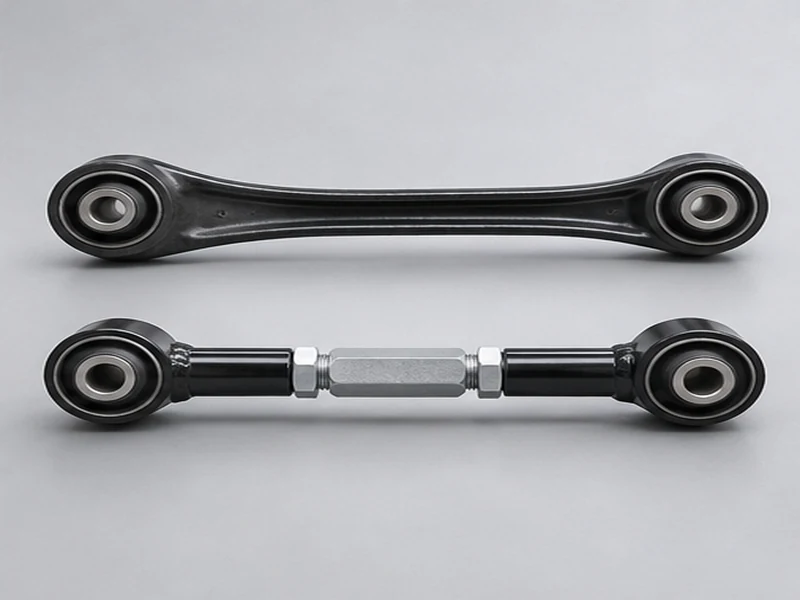
Both types help locate the wheel assembly relative to the chassis or subframe. The main difference is whether the arm incorporates a mechanism for changing a specified geometric parameter.
Feature | Adjustable Control Arms | Fixed Control Arms |
Suspension geometry | Allows a specified adjustment | Main arm geometry is fixed |
Adjustment mechanism | Threaded adjuster, adjustable pivot or another design | No built-in arm-geometry adjuster |
Installation | Requires setting and securing the specified adjustment | Installed to the intended fixed geometry |
Alignment checks | Adjustment and alignment must be verified | Alignment may still require checking after replacement |
Typical application | Compatible alignment correction or suspension modification | OE-equivalent replacement and routine repair |
Key purchasing risk | Incorrect adjustment function, range or locking arrangement | Incorrect fitment or replacement dimensions |
Adjustable does not automatically mean better. A properly matched fixed arm may be the correct replacement for a standard suspension, while an adjustable arm is appropriate only when its adjustment function and vehicle compatibility have been established.
Adjustable control arms use different mechanisms. Understanding the design helps buyers identify the correct product and the specifications that matter.
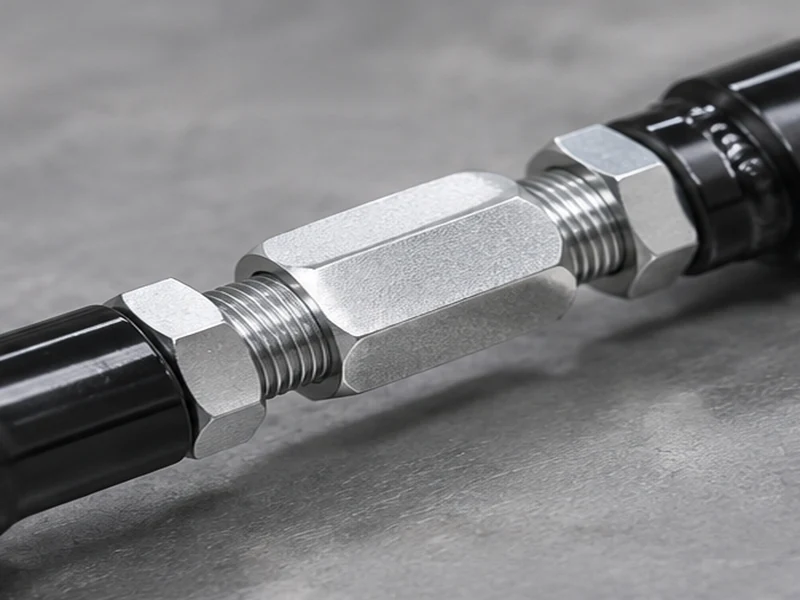
Some adjustable arms and suspension links use a turnbuckle-style sleeve with left-hand and right-hand threads. Rotating the sleeve changes the effective distance between the connection points without necessarily disconnecting the assembly.
Other threaded designs require an end connection to be released before adjustment.
For each product, confirm the thread diameter, pitch, direction, permitted adjustment range, minimum thread engagement and locking method.
The number of exposed threads is not a universal indication of safe adjustment. The allowable limit must come from the specific manufacturer's instructions.
Other designs adjust geometry by changing a pivot or joint position rather than the length of a threaded arm.
For example, some adjustable upper control arms change the position of the upper ball joint or pivot arrangement to provide a specified alignment adjustment.
These designs should be compared using their actual mounting geometry and adjustment function, not just the presence or absence of a threaded sleeve.
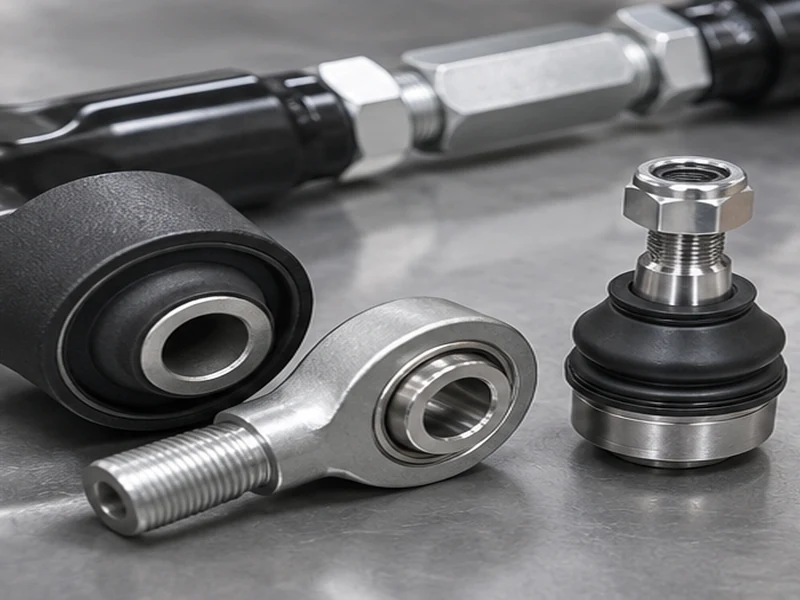
Connection types also vary:
Rubber bushings provide controlled compliance and vibration isolation.
Polyurethane bushings have application-dependent stiffness and deformation characteristics.
Ball joints permit angular movement at designated suspension connections.
Spherical rod ends provide bearing-type articulation and may have different sealing and maintenance requirements.
A rod end is not automatically a better replacement for an OE rubber bushing. Joint selection must match the vehicle's intended use and suspension design.
Related components can be found in the Auto Suspension Parts category.
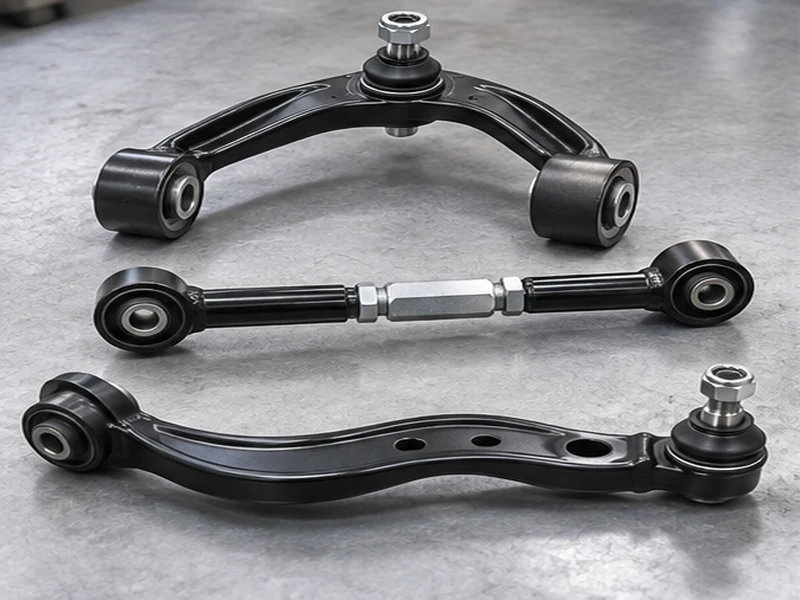
Adjustable upper control arms are used in suspension layouts with an upper control arm. Depending on their design, they may provide additional camber or caster adjustment.
Adjustable lower control arms fit specific lower mounting positions. Their geometry, loading conditions, mounting hardware and adjustment purpose may differ substantially from upper arms.
Upper and lower arms cannot be interchanged based on similar appearance or material.
A single-adjuster design uses one designated adjustment mechanism. A dual-adjuster design incorporates two adjustable sections or mechanisms.
However, two adjusters do not necessarily mean twice the adjustment range or independent control of two alignment angles. Buyers must check the actual adjustment instructions for the specific model.
Steel adjustable control arms may use tubular, stamped, forged or fabricated construction. Aluminum versions may use forged, cast or machined components.
Material choice should be assessed alongside material grade, cross-sectional design, manufacturing process, corrosion protection and available structural validation.
Neither material alone establishes superior strength, durability or vehicle compatibility.
A product can look correct in a catalog but still be unsuitable for the intended vehicle. The following checks help reduce ordering errors.
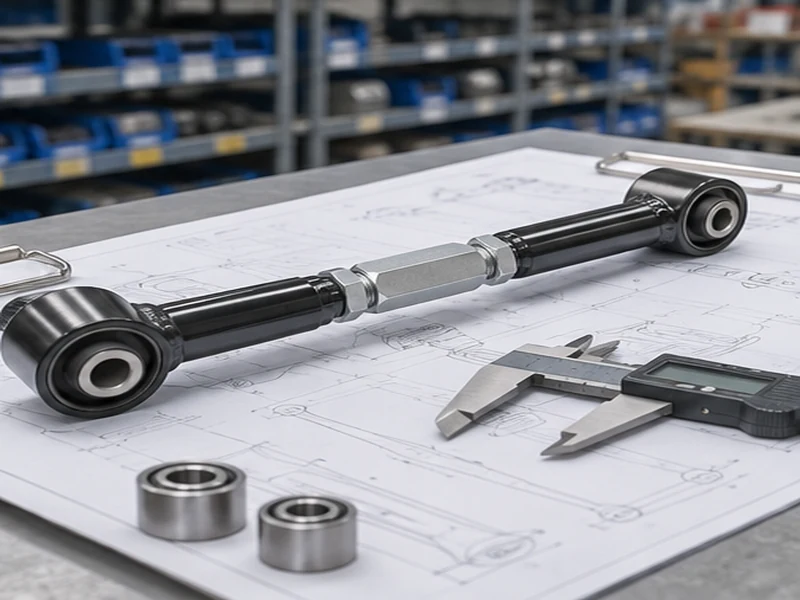
Specification | Common Purchasing Mistake | What to Verify |
Arm length | Comparing overall length only | Mounting-center distance and the drawing's measurement reference |
Adjustment range | Using a general advertised adjustment figure | Nominal setting, permitted minimum and maximum, and measurement method |
Threaded adjuster | Checking thread diameter only | Diameter, pitch, direction, engagement limit and locking method |
Ball joint | Matching by visual appearance | Stud taper, mounting dimensions and required articulation |
Bushing | Matching by material name alone | Inner diameter, outer diameter, installation width and design |
Mounting hardware | Assuming original hardware is always reusable | Supplied hardware, fastener specification and installation requirements |
Vehicle fitment | Relying only on an OE number | Model, year, chassis, suspension layout, mounting position and part-specific compatibility |
OE references help identify the original application, but an adjustable aftermarket control arm may have different geometry or a different intended function.
A valid cross-reference therefore needs supporting fitment information, including installation position, connection dimensions and the applicable suspension variant.
Part-Industry lists a rear upper camber control arm. Buyers should verify its actual construction, adjustment capability and vehicle application rather than assuming it matches every adjustable camber arm.
Before confirming a bulk order, request the relevant product drawing, fitment list, adjustment and installation instructions, and available quality documentation.
Where durability or corrosion performance is claimed, ask for the test method and acceptance criteria rather than relying on a general statement such as "heavy-duty" or "long-lasting."
After installation, the suspension must be checked for clearance and aligned according to the applicable vehicle and component procedures.
For routine replacement, an OE-equivalent fixed control arm may be the correct choice. Adjustable control arms are better suited to applications where a compatible suspension requires a specific geometric adjustment.
The most reliable wholesale selection process is to confirm the adjustment function and vehicle fitment first, then verify dimensions, joints, locking requirements and supporting documentation.
Preparing a wholesale order or adding adjustable control arms to your suspension parts catalog?
Send Part-Industry your target vehicle models, OE references, product drawings or photos, required adjustment function and estimated order quantities. These details will help identify suitable sourcing options and clarify the specifications that need confirmation.
Submit Your Control Arm Inquiry


