
Views: 0 Author: Site Editor Publish Time: 2026-10-09 Origin: Site


Why can two stamped steel control arms that look almost the same perform differently in the market?
The answer often comes down to details that are difficult to judge from the finished part alone, such as steel quality, stamping accuracy, weld consistency, and dimensional control.
For distributors and importers, these details matter when ordering in bulk. Knowing where quality problems can occur makes it easier to evaluate a supplier and check whether the control arms can maintain consistent fitment from one batch to the next.

A stamped steel control arm is formed from steel sheet through a controlled stamping process and may use welding to join different structural sections. Because the finished part has to maintain its geometry under repeated suspension loads, manufacturing consistency is critical.
Improper forming conditions, inconsistent material properties, inaccurate tooling, or insufficient process control can cause dimensional deformation.
For a stamped steel control arm, important areas include mounting holes, bushing positions, ball joint mounting points, and the overall shape of the arm. Even when a deformation is not obvious visually, it can affect installation and the position of related suspension components.
Dimensional inspection should therefore be based on approved drawings, samples, or OE reference requirements.
Many stamped steel control arms use welded sections to create the required structure. Common concerns include inconsistent weld positioning, incomplete weld areas, porosity, visible cracks, and poor weld appearance.
The inspection requirements depend on the control arm design and approved manufacturing specification. A reliable supplier should control welding fixtures, parameters, component positioning, and inspection procedures throughout production.
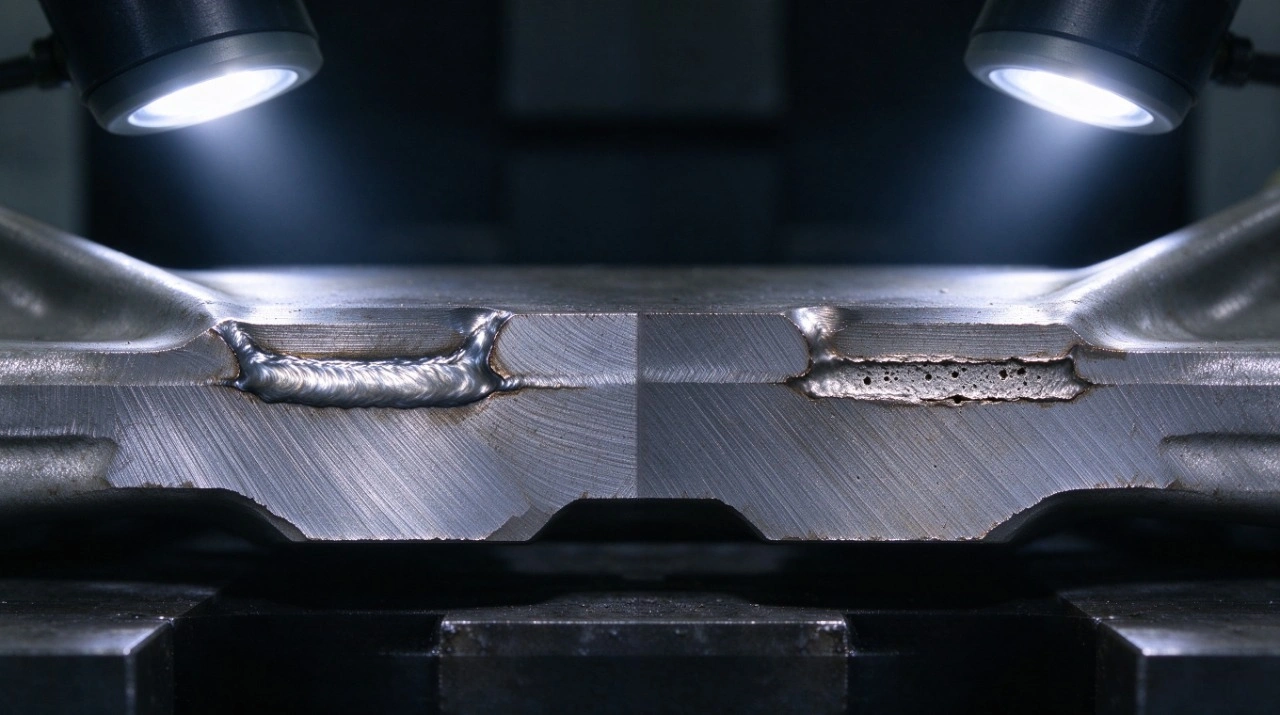
Steel control arms are designed to withstand repeated loads while maintaining their required geometry. Problems can occur when material selection, structural design, forming conditions, or manufacturing consistency do not meet the intended requirements.
This does not mean stamped steel control arms are inherently weak. Properly engineered and manufactured stamped steel control arms can be suitable for many passenger vehicle applications. The important issue is whether the manufacturing process consistently produces parts that meet the required design and fitment specifications.
Quality control starts before mass production.
Steel grade and material thickness should match the approved product specification. Buyers should confirm the material requirements for each control arm rather than assuming all stamped steel control arms use the same steel.
Material consistency is especially important for bulk orders because differences between production batches can affect forming behavior and dimensional stability.
Stamping accuracy directly affects the geometry of the finished component.
A controlled production process should consider die condition, forming sequence, material positioning, and dimensional repeatability. Springback also needs to be considered because formed sheet metal can move slightly after the forming force is released.
Critical dimensions should be checked against the approved drawing or reference sample throughout production.
Where welding is part of the design, fixtures should hold components in the correct position during welding. Consistent welding procedures help maintain structural geometry and reduce variation between individual parts.
Weld inspection should be appropriate for the product specification and may include visual, dimensional, or other agreed inspection methods.
Final inspection should cover more than overall appearance. Depending on the design, important inspection points can include:
Mounting hole position and diameter
Bushing housing position
Ball joint mounting area
Overall dimensions
Symmetry and alignment
Welded areas
Surface treatment
Fitment against approved samples or drawings
For aftermarket buyers, these checks help ensure that a production batch is consistent rather than simply confirming that one sample looks acceptable.
There is no single material thickness, weld size, or dimensional tolerance that applies to every stamped steel control arm. Requirements vary according to vehicle application, control arm geometry, steel specification, and OE design.
For procurement, the following items are more useful than relying on generic numbers:
Quality Item | What Buyers Should Check |
Steel grade | Match the approved material specification |
Material thickness | Verify against the drawing or agreed specification |
Stamping dimensions | Check critical forming dimensions |
Mounting holes | Confirm position, diameter, and consistency |
Welds | Check location, continuity, and appearance |
Bushing housing | Verify position and dimensional consistency |
Ball joint mounting | Confirm fitment and retention requirements |
Surface treatment | Check coating and corrosion protection |
Final dimensions | Compare with approved drawings or samples |
Requesting relevant technical documentation before mass production can also reduce misunderstandings between buyers and stamped steel control arm suppliers.
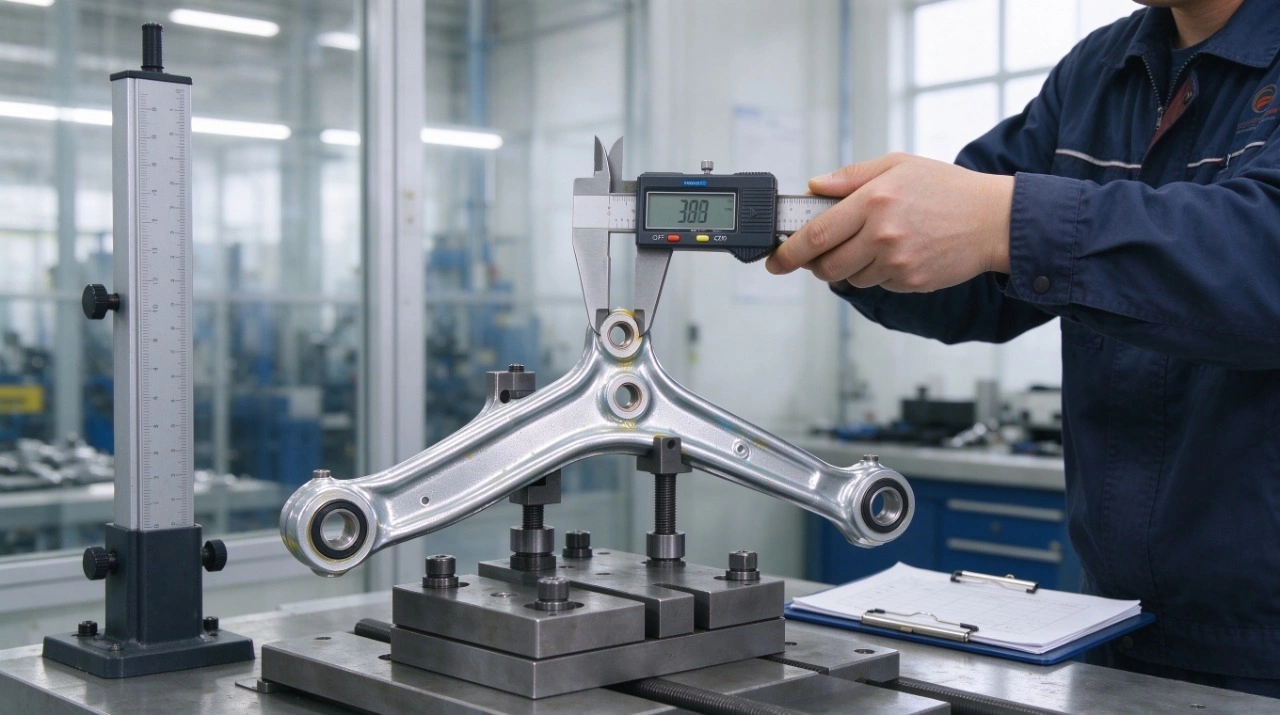
Bulk aftermarket orders require attention to batch consistency. A single approved sample does not automatically guarantee that every production piece will have the same dimensions and finish.
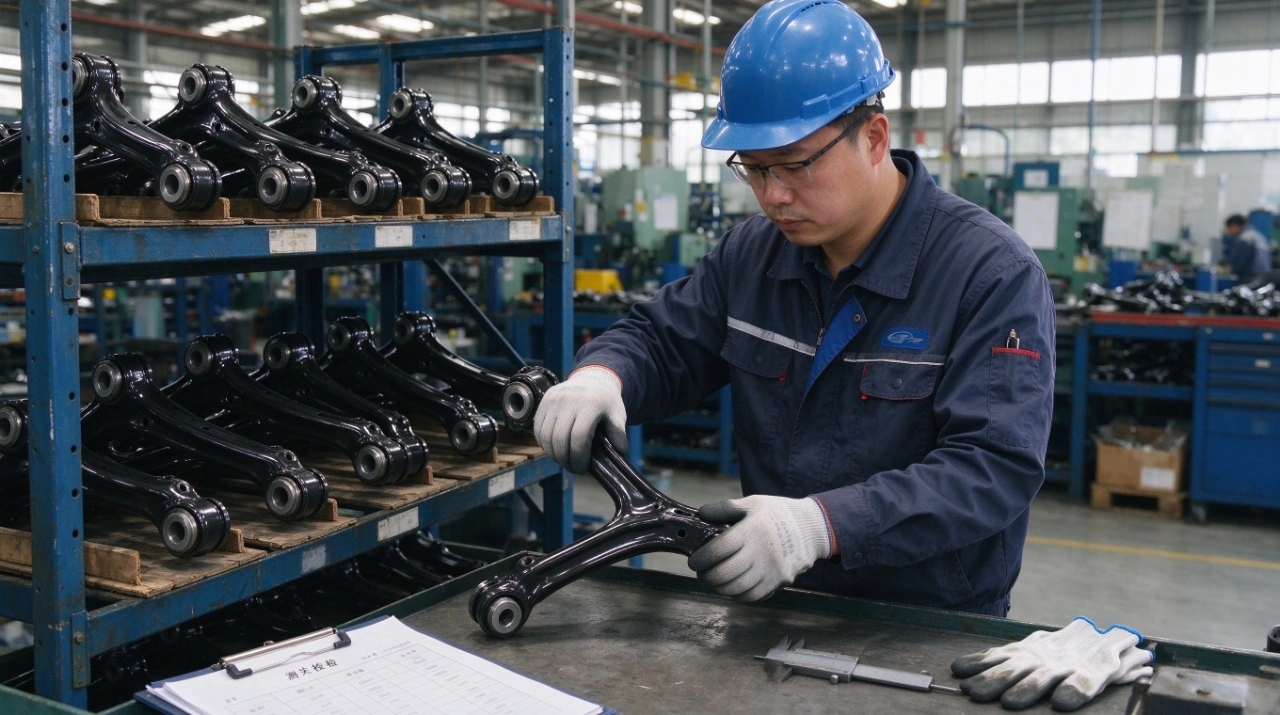
Approved drawings and samples
OE reference numbers and applications
Material requirements
Packaging, labeling, and inspection standards
Steel material consistency
Stamping dimensions
Tooling condition
Component positioning
Welding quality
Surface treatment
Overall dimensions
Mounting points
Bushing and ball joint areas
Weld quality
Surface finish and corrosion protection
Packaging and product quantity
Random samples from the finished batch
For international buyers, this approach is particularly useful because correcting a quality issue after shipment can be considerably more difficult than identifying it before loading.

Stamped steel control arms remain widely relevant to high-volume aftermarket supply because stamping supports repeatable production of sheet-metal structures, while steel provides a practical combination of structural performance, manufacturing cost, and compatibility with established vehicle designs.
For distributors and importers, the supplier's ability to consistently reproduce the required design and quality standard is an important consideration when sourcing these parts.
For bulk buyers, five areas deserve particular attention:
Material consistency – The steel should match the agreed specification.
Stamping accuracy – Critical dimensions should remain consistent throughout production.
Weld quality – Welded sections should meet the agreed manufacturing and inspection requirements.
Dimensional control – Mounting points and other critical dimensions should be verified.
Batch inspection – Final inspection should confirm consistency across the production order.
Part Industry supplies OE replacement suspension components for the automotive aftermarket, including control arms for wholesale and distributor applications. For buyers sourcing stamped steel control arms, product specifications, fitment requirements, customization, private-label packaging, and bulk-order requirements can be discussed according to the application.
The quality of a stamped steel control arm depends on much more than the appearance of the finished part. Steel material, stamping accuracy, welding, dimensional control, surface treatment, and final inspection all contribute to consistent aftermarket performance and fitment.
For distributors and importers, evaluating these factors before placing a bulk order can help reduce quality risks and avoid costly problems after shipment.
If you are sourcing stamped steel control arms for wholesale or aftermarket applications, contact Part Industry to discuss product specifications, bulk-order inspection documentation, and available material certificates.


